Cost control
What is SaaS Management? The 2026 Guide
SaaS management is how teams track, govern, and optimize the software stack across spend, usage, access, and renewals. This guide breaks down what it includes in 2026, why it matters, and how to implement it without turning operations into a bureaucracy.
TL;DR: SaaS Management in 2026
TL;DR: SaaS Management in 2026
What SaaS management actually is
SaaS management is the practice of discovering, governing, and optimizing all SaaS tools across a business. It connects usage, cost, access, and ownership so software is controlled intentionally, not by accident.
Why it’s no longer optional
Modern B2B companies run on dozens or hundreds of SaaS tools. Without SaaS management, organizations overspend on unused licenses, accumulate shadow IT, and expose themselves to security and compliance risk.
Who needs what
Startups and small teams benefit most from lightweight subscription tracking and renewal control.
Mid-market and enterprise teams require full SaaS management platforms to handle scale, governance, security, and optimization.
The bottom line
SaaS sprawl is not a tooling problem. It is a management problem. Companies without visibility and ownership leak budget, increase risk, and slow themselves down.
Immediate action
If your team is growing and renewals are starting to surprise you, start by learning how to find hidden monthly subscriptions, then centralize renewals in Subsight. Early SaaS control is far cheaper than late-stage cleanup.
What SaaS management actually is
SaaS management is the practice of discovering, governing, and optimizing all SaaS tools across a business. It connects usage, cost, access, and ownership so software is controlled intentionally, not by accident.
Why it’s no longer optional
Modern B2B companies run on dozens or hundreds of SaaS tools. Without SaaS management, organizations overspend on unused licenses, accumulate shadow IT, and expose themselves to security and compliance risk.
Who needs what
Startups and small teams benefit most from lightweight subscription tracking and renewal control.
Mid-market and enterprise teams require full SaaS management platforms to handle scale, governance, security, and optimization.
The bottom line
SaaS sprawl is not a tooling problem. It is a management problem. Companies without visibility and ownership leak budget, increase risk, and slow themselves down.
Immediate action
If your team is growing and renewals are starting to surprise you, start by learning how to find hidden monthly subscriptions, then centralize renewals in Subsight. Early SaaS control is far cheaper than late-stage cleanup.
Why SaaS Management Is No Longer Optional
Most B2B teams don’t have a SaaS strategy. They have a SaaS pileup.
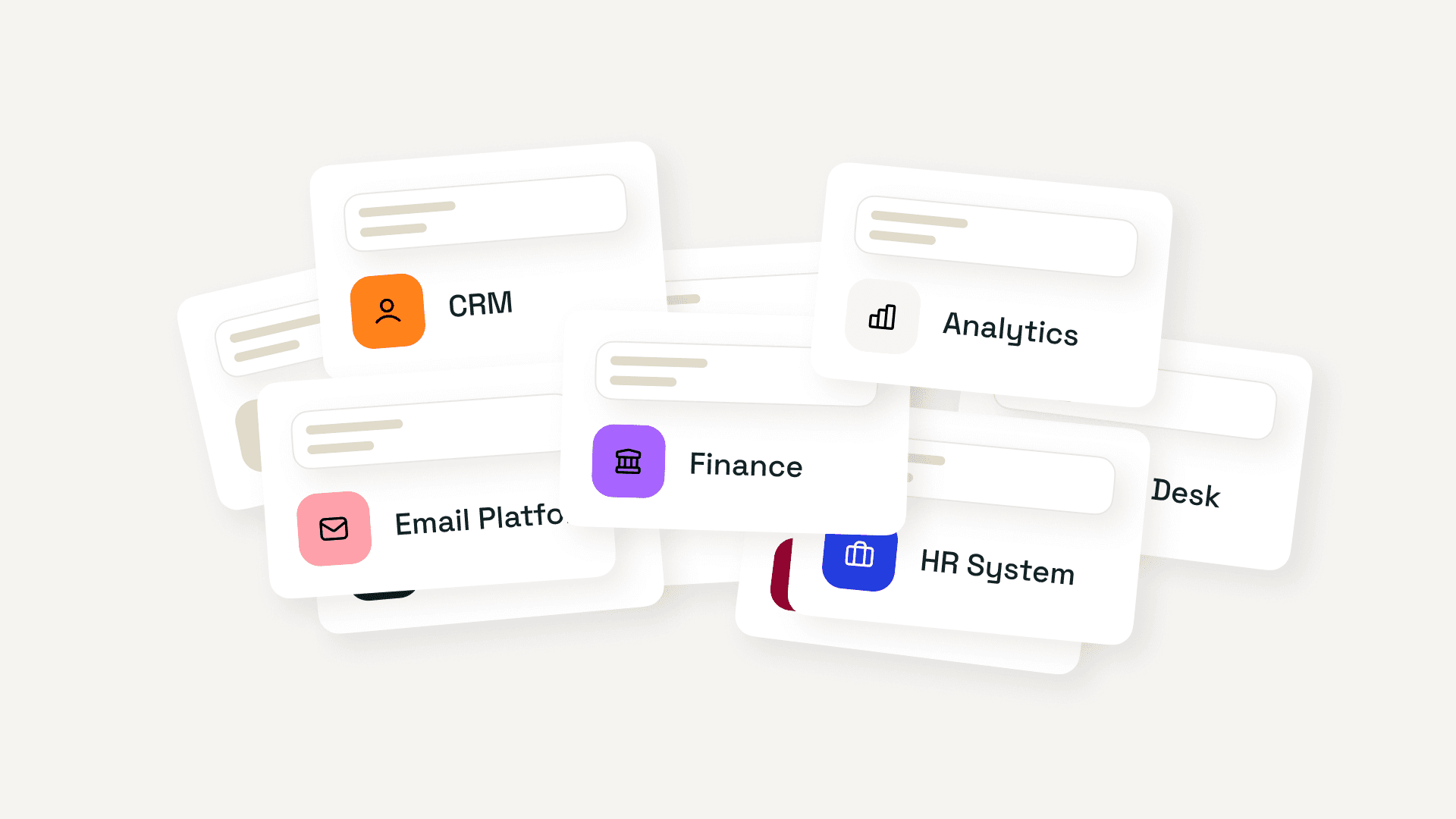
Tools get added fast, often outside formal IT or finance processes. Over time, ownership gets fuzzy, licenses drift, and contracts auto-renew. Finance sees spend but not usage. IT sees parts of the stack but not what’s purchased on cards. Security is left guessing where data lives, especially for IT & Ops teams.
That’s the real problem SaaS management solves: visibility and control across the entire SaaS estate.
Spreadsheets break because SaaS is decentralized by default. Manual lists don’t catch shadow IT, and renewal calendars don’t scale. This fragmentation is a common issue for growing small businesses and agencies alike.
SaaS management replaces guesswork with a system: what you use, who owns it, who has access, what it costs, and when it renews. It makes renewals intentional, exposes waste early, and flags risk before it becomes a breach or compliance issue.
Why SaaS Management Is No Longer Optional
Most B2B teams don’t have a SaaS strategy. They have a SaaS pileup.
Tools get added fast, often outside formal IT or finance processes. Over time, ownership gets fuzzy, licenses drift, and contracts auto-renew. Finance sees spend but not usage. IT sees parts of the stack but not what’s purchased on cards. Security is left guessing where data lives, especially for IT & Ops teams.
That’s the real problem SaaS management solves: visibility and control across the entire SaaS estate.
Spreadsheets break because SaaS is decentralized by default. Manual lists don’t catch shadow IT, and renewal calendars don’t scale. This fragmentation is a common issue for growing small businesses and agencies alike.
SaaS management replaces guesswork with a system: what you use, who owns it, who has access, what it costs, and when it renews. It makes renewals intentional, exposes waste early, and flags risk before it becomes a breach or compliance issue.


Get SaaS visibility
See how teams regain visibility and control across growing SaaS stacks.
What this guide covers
What SaaS management means in 2026 (not buzzwords, actual scope)
The scale of the SaaS problem: sprawl, shadow IT, and spend leakage
The core pillars: visibility, optimization, cost control, and risk management
A practical implementation framework, from discovery to ongoing maintenance
How SaaS management changes by company size (startup to enterprise)
If your company runs on subscriptions, SaaS management isn’t optional infrastructure. It’s how you stop software from managing you.
What Is SaaS Management?
SaaS management is the practice of discovering, governing, and optimizing all software-as-a-service tools used across an organization. It provides a continuously updated view of what software exists, who owns it, who can access it, how much it costs, and whether it is being used.
In 2026, SaaS management is not a static inventory. It is an operational layer connecting usage data, financial data, access control, and contract terms. This distinction is often misunderstood, especially when comparing SaaS management with basic subscription tracking, as discussed in What is the best subscription tracker of 2026?.
SaaS management vs basic subscription tracking
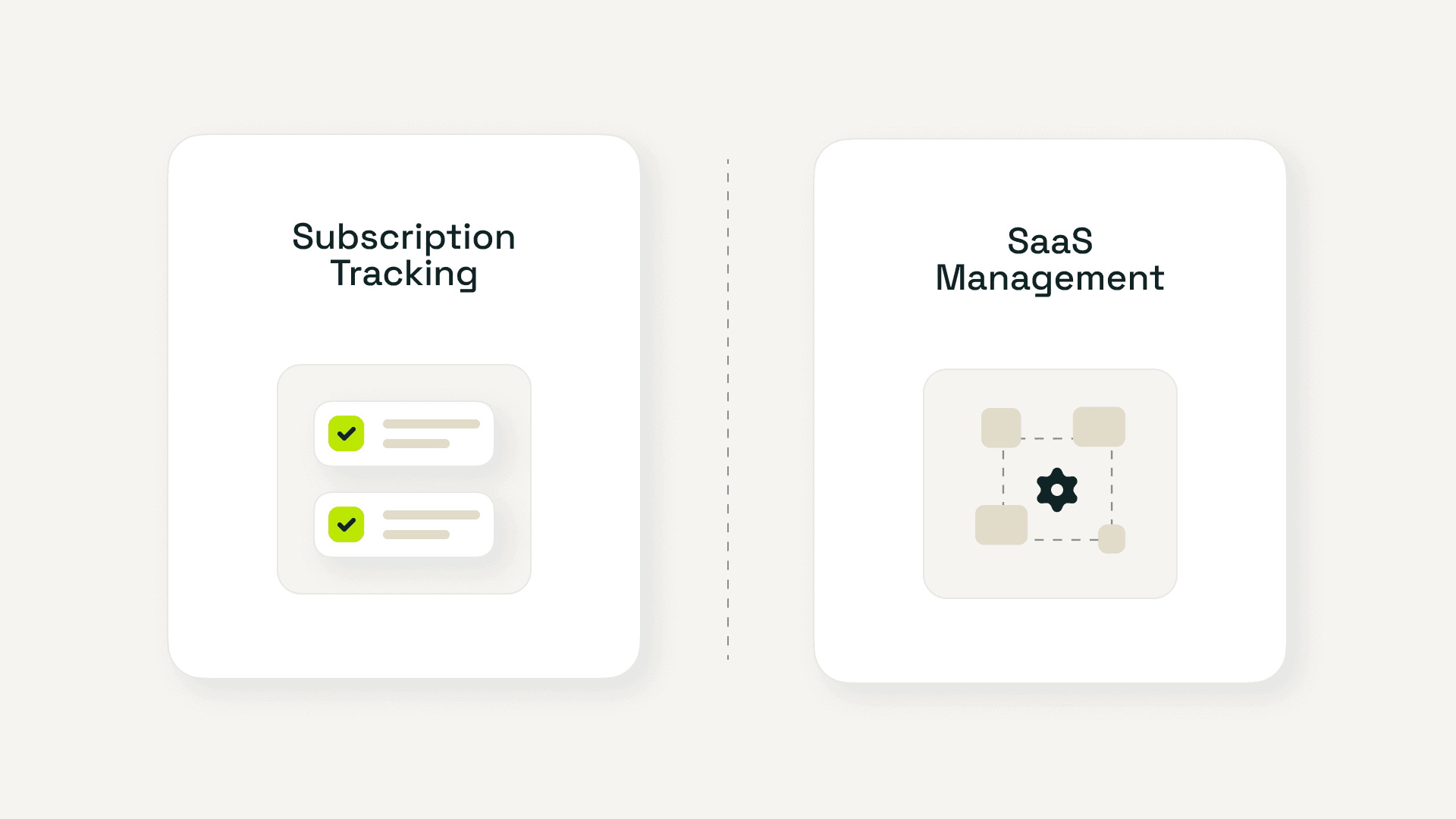
Subscription tracking answers a narrow set of questions, and if you’re evaluating options, see the best subscription tracker of 2026: what tools do we pay for, and when do they renew. SaaS management goes further by connecting subscriptions to usage, access, and governance, which is especially critical for finance teams.
SaaS management goes further by connecting subscriptions to reality:
Who is actively using the tool
How many licenses are actually needed
Whether multiple tools overlap in function
Whether access and permissions are still appropriate
Tracking is reactive. Management is continuous. One records data, the other enables decisions.
Area | Subscription Tracking | SaaS Management |
|---|---|---|
Primary focus | Renewals and billing | Full SaaS lifecycle control |
Visibility | What tools exist | What exists, who uses it, who owns it |
License insight | Manual or none | Usage-based, continuous |
Security context | Not included | Access, risk, compliance |
Best for | Early-stage teams | Growing and complex organizations |
Why SaaS management spans IT, finance, security, and leadership
SaaS management cannot live in a single department because the problems it solves do not belong to one.
IT needs visibility into access, integrations, and tool sprawl. Finance teams need accurate, explainable SaaS spend tied to usage. Security needs to know where data lives and who can reach it. Leadership needs confidence that software decisions support business priorities, not accidental growth.
SaaS management works because it creates a shared source of truth across these functions. Instead of fragmented views and competing assumptions, teams operate from the same data and make decisions with context rather than guesswork.
The SaaS Sprawl Crisis
SaaS Sprawl: How We Got Here
SaaS sprawl didn’t come from bad decisions. It came from good ones made in isolation.
Teams adopt tools to move faster, especially in delivery-heavy orgs like agencies. Procurement friction is low.
Credit-card purchasing
Free trials becoming renewals
Team-by-team tooling decisions
Point solutions added to patch workflows
No owner assigned at purchase time
Over time, these local optimizations create overlapping tools, rising costs, and limited accountability. This pattern is common across agencies and mid-market teams scaling quickly.
Modern organizations now operate with dozens or hundreds of SaaS applications, often without a clear understanding of how many they have or what they’re paying for, as documented in the State of SaaS report. The ease of adoption that made SaaS attractive is the same force that makes it hard to control.
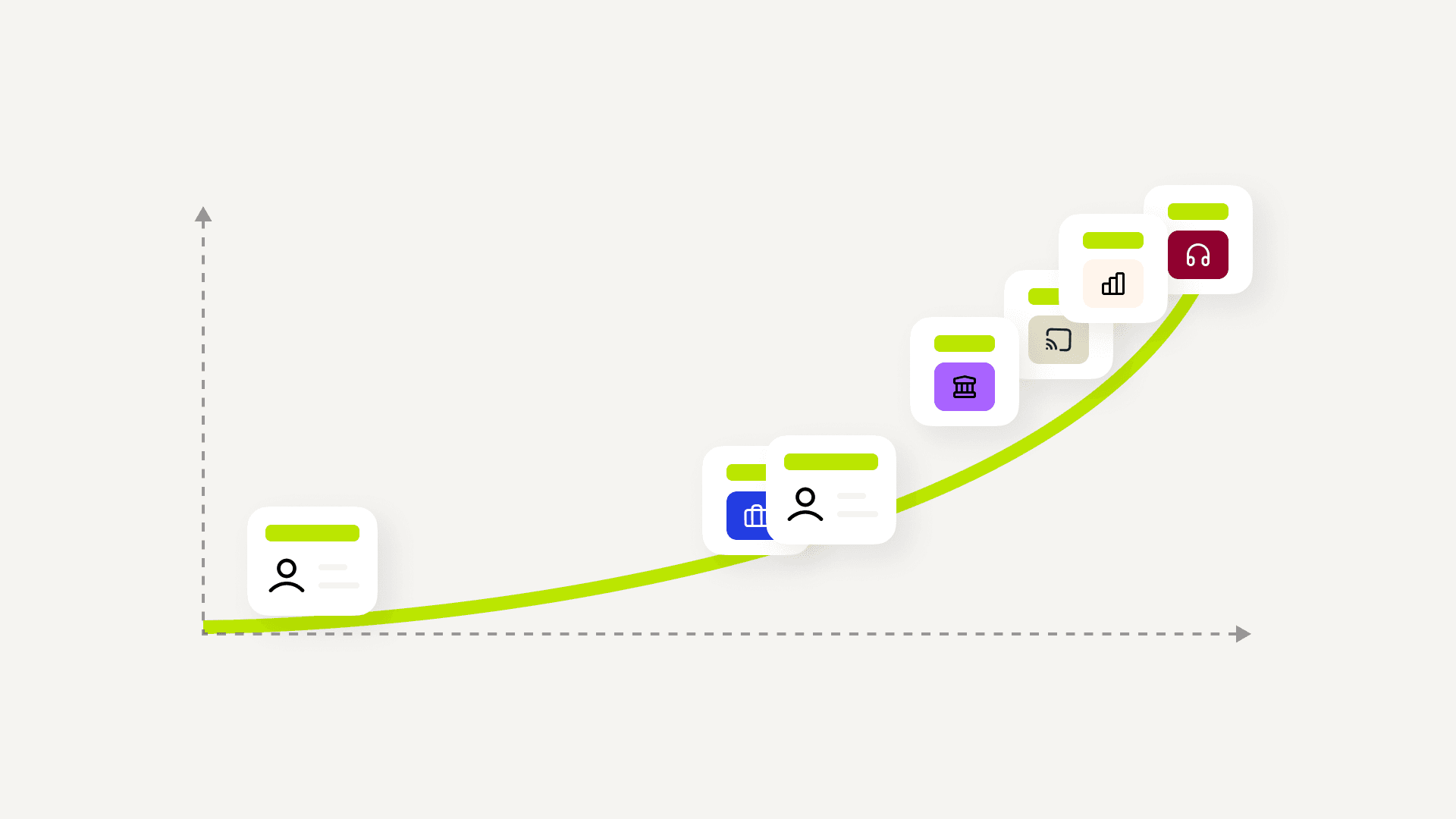
What works with ten tools breaks at fifty. What feels manageable at one hundred becomes chaos at two hundred.
Shadow IT and the Visibility Gap
As SaaS purchasing decentralizes, visibility collapses.
A large share of tools in use were never formally approved or documented. They have no clear owner, no defined renewal process, and no consistent access controls. These applications may handle sensitive data, yet sit entirely outside IT oversight.
This is the core visibility gap. Finance sees fragmented charges. IT sees partial access. Security sees unknown risk. Without a system that connects these signals, most SaaS remains effectively invisible, even while it is actively used every day.
The Financial Impact of Unmanaged SaaS
The total cost of ownership (TCO) of unmanaged SaaS rarely shows up as a single failure. It accumulates quietly.
Licenses stay assigned after employees leave. Teams overbuy seats “just in case.” Multiple tools solve the same problem in parallel. Contracts renew automatically without usage review.
At the same time, SaaS spend per employee continues to rise. As headcount grows, software costs often scale faster, not because value increased, but because no one was watching closely.
Without visibility and ownership, SaaS waste becomes structural. SaaS management exists to surface these issues early, while they are still cheap to fix.
Issue | How it happens | Impact |
|---|---|---|
Unused licenses | Employees leave, access not removed | Direct budget waste |
Duplicate tools | Teams buy independently | Inflated SaaS stack |
Auto-renewals | No ownership or alerts | Locked-in spend |
Shadow IT | Tools outside IT oversight | Security and compliance risk |
The Core Pillars of SaaS Management
SaaS management is not a single function. It works because several capabilities reinforce each other. Weakness in one area undermines the rest.
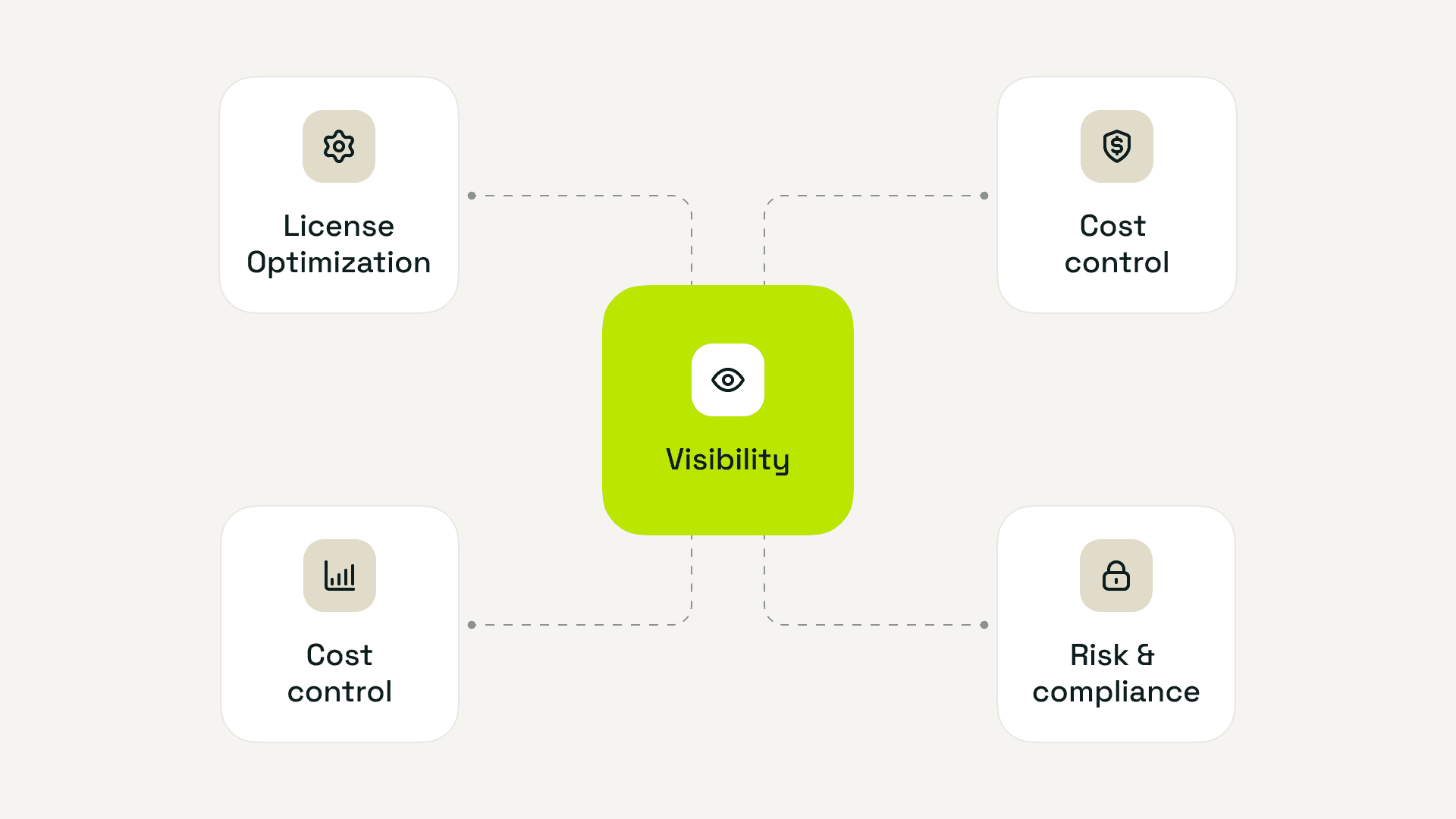
Complete SaaS Visibility
Everything starts with visibility. If you do not know what software is in use, who owns it, or who can access it, control is impossible.
Modern SaaS visibility is built by connecting multiple signals. Finance data shows what is being paid for. Identity systems show who has access. HR data provides context on who should have access. Usage data confirms what tools are actually used.
At a minimum, visibility should answer a small set of non-negotiable questions:
What SaaS applications are in use, including unsanctioned ones
Who owns each application
Who currently has access
What the application costs
When it renews
This is what allows organizations to distinguish between sanctioned and unsanctioned tools and decide what belongs in the stack.
License Optimization
Visibility enables action. License optimization focuses on aligning spend with reality.
In practice, this means tracking usage, removing unused seats, and adjusting license counts as teams and roles change. Many organizations continue paying for licenses assigned to former employees or inactive users simply because no one is monitoring drift.
Optimization is not about cutting aggressively. It is about removing waste without removing capability.
It also solves the alignment problem: productivity suffers not because teams are inefficient, but because systems are misaligned. When different teams use different tools for the same work, information gets scattered.
Cost Control and Spend Optimization
SaaS costs are fragmented by default. Subscriptions are billed monthly or annually, often across multiple cards, departments, and vendors.
Centralizing spend data, as outlined in Features, turns scattered invoices into a coherent picture. Teams can see total SaaS spend, upcoming renewals, and pricing changes before they hit the budget.
For smaller teams, this often starts with simple subscription tracking focused on renewals and ownership. For larger organizations, it extends to contract optimization and usage-based renewal decisions.
Risk, Security, and Compliance
For IT & Ops teams, every unmanaged SaaS tool expands the attack surface.
Without visibility, security teams cannot enforce access controls, review data handling practices, or meet compliance requirements. Unsanctioned tools often operate outside standards such as SOC 2 or GDPR, not by intent, but by omission, which aligns with Gartner research on customer responsibility in cloud security.
SaaS management reduces risk by making every application visible, owned, and reviewable. Shadow IT stops being an unknown liability and becomes a deliberate decision.
What this guide covers
What SaaS management means in 2026 (not buzzwords, actual scope)
The scale of the SaaS problem: sprawl, shadow IT, and spend leakage
The core pillars: visibility, optimization, cost control, and risk management
A practical implementation framework, from discovery to ongoing maintenance
How SaaS management changes by company size (startup to enterprise)
If your company runs on subscriptions, SaaS management isn’t optional infrastructure. It’s how you stop software from managing you.
What Is SaaS Management?
SaaS management is the practice of discovering, governing, and optimizing all software-as-a-service tools used across an organization. It provides a continuously updated view of what software exists, who owns it, who can access it, how much it costs, and whether it is being used.
In 2026, SaaS management is not a static inventory. It is an operational layer connecting usage data, financial data, access control, and contract terms. This distinction is often misunderstood, especially when comparing SaaS management with basic subscription tracking, as discussed in What is the best subscription tracker of 2026?.
SaaS management vs basic subscription tracking
Subscription tracking answers a narrow set of questions, and if you’re evaluating options, see the best subscription tracker of 2026: what tools do we pay for, and when do they renew. SaaS management goes further by connecting subscriptions to usage, access, and governance, which is especially critical for finance teams.
SaaS management goes further by connecting subscriptions to reality:
Who is actively using the tool
How many licenses are actually needed
Whether multiple tools overlap in function
Whether access and permissions are still appropriate
Tracking is reactive. Management is continuous. One records data, the other enables decisions.
Area | Subscription Tracking | SaaS Management |
|---|---|---|
Primary focus | Renewals and billing | Full SaaS lifecycle control |
Visibility | What tools exist | What exists, who uses it, who owns it |
License insight | Manual or none | Usage-based, continuous |
Security context | Not included | Access, risk, compliance |
Best for | Early-stage teams | Growing and complex organizations |
Why SaaS management spans IT, finance, security, and leadership
SaaS management cannot live in a single department because the problems it solves do not belong to one.
IT needs visibility into access, integrations, and tool sprawl. Finance teams need accurate, explainable SaaS spend tied to usage. Security needs to know where data lives and who can reach it. Leadership needs confidence that software decisions support business priorities, not accidental growth.
SaaS management works because it creates a shared source of truth across these functions. Instead of fragmented views and competing assumptions, teams operate from the same data and make decisions with context rather than guesswork.
The SaaS Sprawl Crisis
SaaS Sprawl: How We Got Here
SaaS sprawl didn’t come from bad decisions. It came from good ones made in isolation.
Teams adopt tools to move faster, especially in delivery-heavy orgs like agencies. Procurement friction is low.
Credit-card purchasing
Free trials becoming renewals
Team-by-team tooling decisions
Point solutions added to patch workflows
No owner assigned at purchase time
Over time, these local optimizations create overlapping tools, rising costs, and limited accountability. This pattern is common across agencies and mid-market teams scaling quickly.
Modern organizations now operate with dozens or hundreds of SaaS applications, often without a clear understanding of how many they have or what they’re paying for, as documented in the State of SaaS report. The ease of adoption that made SaaS attractive is the same force that makes it hard to control.
What works with ten tools breaks at fifty. What feels manageable at one hundred becomes chaos at two hundred.
Shadow IT and the Visibility Gap
As SaaS purchasing decentralizes, visibility collapses.
A large share of tools in use were never formally approved or documented. They have no clear owner, no defined renewal process, and no consistent access controls. These applications may handle sensitive data, yet sit entirely outside IT oversight.
This is the core visibility gap. Finance sees fragmented charges. IT sees partial access. Security sees unknown risk. Without a system that connects these signals, most SaaS remains effectively invisible, even while it is actively used every day.
The Financial Impact of Unmanaged SaaS
The total cost of ownership (TCO) of unmanaged SaaS rarely shows up as a single failure. It accumulates quietly.
Licenses stay assigned after employees leave. Teams overbuy seats “just in case.” Multiple tools solve the same problem in parallel. Contracts renew automatically without usage review.
At the same time, SaaS spend per employee continues to rise. As headcount grows, software costs often scale faster, not because value increased, but because no one was watching closely.
Without visibility and ownership, SaaS waste becomes structural. SaaS management exists to surface these issues early, while they are still cheap to fix.
Issue | How it happens | Impact |
|---|---|---|
Unused licenses | Employees leave, access not removed | Direct budget waste |
Duplicate tools | Teams buy independently | Inflated SaaS stack |
Auto-renewals | No ownership or alerts | Locked-in spend |
Shadow IT | Tools outside IT oversight | Security and compliance risk |
The Core Pillars of SaaS Management
SaaS management is not a single function. It works because several capabilities reinforce each other. Weakness in one area undermines the rest.
Complete SaaS Visibility
Everything starts with visibility. If you do not know what software is in use, who owns it, or who can access it, control is impossible.
Modern SaaS visibility is built by connecting multiple signals. Finance data shows what is being paid for. Identity systems show who has access. HR data provides context on who should have access. Usage data confirms what tools are actually used.
At a minimum, visibility should answer a small set of non-negotiable questions:
What SaaS applications are in use, including unsanctioned ones
Who owns each application
Who currently has access
What the application costs
When it renews
This is what allows organizations to distinguish between sanctioned and unsanctioned tools and decide what belongs in the stack.
License Optimization
Visibility enables action. License optimization focuses on aligning spend with reality.
In practice, this means tracking usage, removing unused seats, and adjusting license counts as teams and roles change. Many organizations continue paying for licenses assigned to former employees or inactive users simply because no one is monitoring drift.
Optimization is not about cutting aggressively. It is about removing waste without removing capability.
It also solves the alignment problem: productivity suffers not because teams are inefficient, but because systems are misaligned. When different teams use different tools for the same work, information gets scattered.
Cost Control and Spend Optimization
SaaS costs are fragmented by default. Subscriptions are billed monthly or annually, often across multiple cards, departments, and vendors.
Centralizing spend data, as outlined in Features, turns scattered invoices into a coherent picture. Teams can see total SaaS spend, upcoming renewals, and pricing changes before they hit the budget.
For smaller teams, this often starts with simple subscription tracking focused on renewals and ownership. For larger organizations, it extends to contract optimization and usage-based renewal decisions.
Risk, Security, and Compliance
For IT & Ops teams, every unmanaged SaaS tool expands the attack surface.
Without visibility, security teams cannot enforce access controls, review data handling practices, or meet compliance requirements. Unsanctioned tools often operate outside standards such as SOC 2 or GDPR, not by intent, but by omission, which aligns with Gartner research on customer responsibility in cloud security.
SaaS management reduces risk by making every application visible, owned, and reviewable. Shadow IT stops being an unknown liability and becomes a deliberate decision.

Control SaaS sprawl
Understand how teams manage licenses, renewals, and risk in one place.
SaaS Management Best Practices for 2026
Effective SaaS management is not about control for its own sake. It is about creating repeatable habits that scale as the organization grows.
At a practical level, mature SaaS management in 2026 follows a small set of principles:
Centralize SaaS operations so applications, access, and spend are visible in one place
Maintain a complete SaaS inventory using automated discovery rather than manual lists
Eliminate redundant applications by regularly reviewing overlap and adoption
Control and optimize SaaS spend through renewal visibility and usage-based decisions
Implement role-based access control to reduce risk and privilege creep
Automate onboarding, offboarding, and approvals so access changes do not rely on memory
Establish clear SaaS and IT policies that define how tools are requested and approved. This replaces the slow traditional procurement workflow with a streamlined process that reduces Shadow IT.
Offer an approved application catalog to guide teams toward sanctioned solutions
Monitor usage and adoption continuously to catch waste and drift early
Streamline vendor and contract management with clear ownership and renewal accountability
Individually, these practices seem obvious. Together, they create a system that prevents SaaS sprawl from returning after cleanup. The goal is not perfection, but consistency.
How to Implement SaaS Management: A Practical Framework
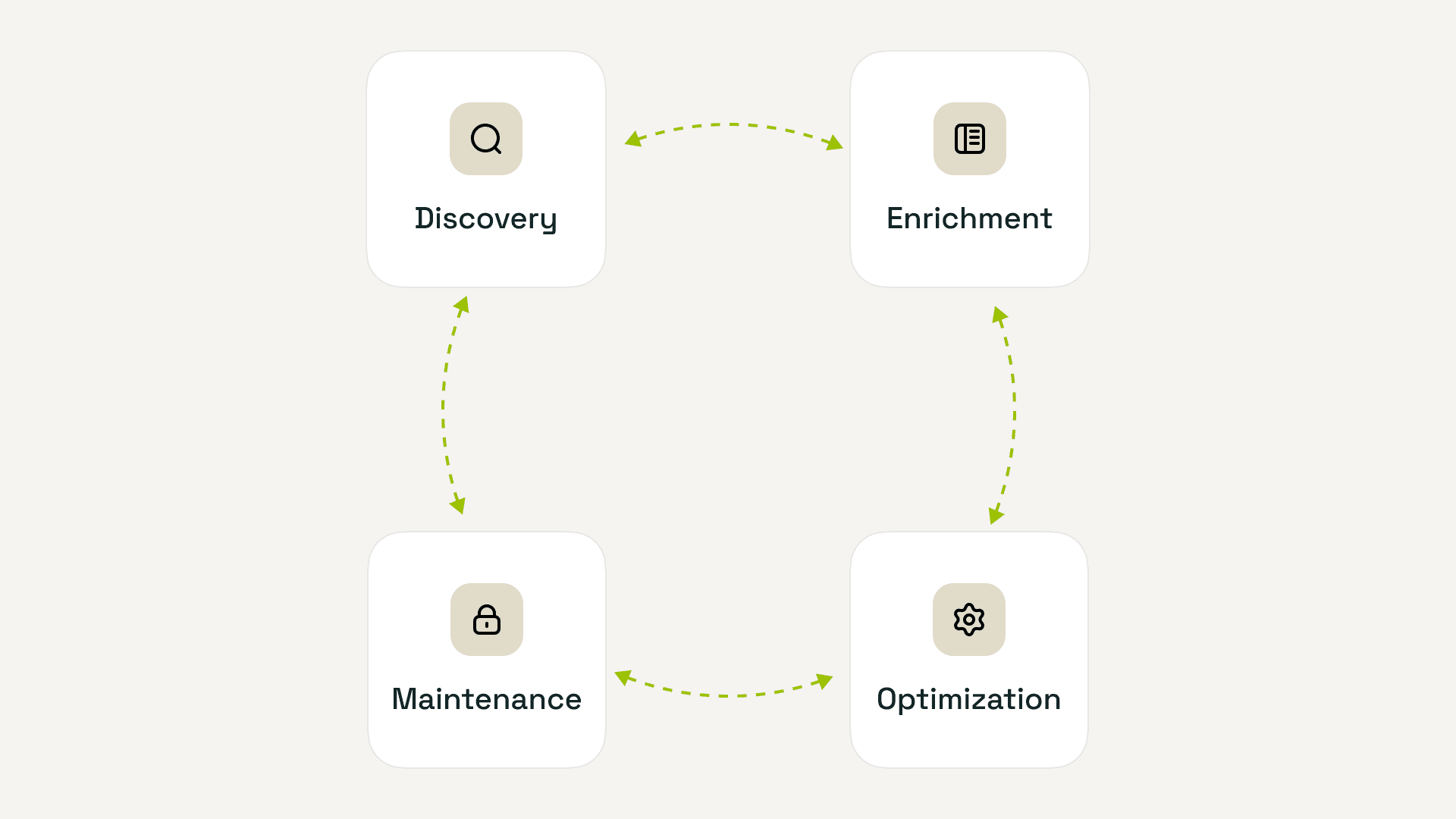
Phase | Focus | Outcome |
|---|---|---|
Discovery | Identify all SaaS | Baseline visibility |
Enrichment | Ownership and context | Accountability |
Optimization | Reduce waste | Cost and risk reduction |
Maintenance | Ongoing monitoring | Long-term control |
SaaS management works best when implemented in phases. Trying to fix everything at once usually leads to stalled projects and partial adoption.
Phase 1: Discovery and Assessment
Start by establishing a baseline. The objective is simple: identify all SaaS applications currently in use.
This requires pulling data from multiple sources, including finance systems, identity providers, HR platforms, and direct application usage.
SaaS Management Best Practices for 2026
Effective SaaS management is not about control for its own sake. It is about creating repeatable habits that scale as the organization grows.
At a practical level, mature SaaS management in 2026 follows a small set of principles:
Centralize SaaS operations so applications, access, and spend are visible in one place
Maintain a complete SaaS inventory using automated discovery rather than manual lists
Eliminate redundant applications by regularly reviewing overlap and adoption
Control and optimize SaaS spend through renewal visibility and usage-based decisions
Implement role-based access control to reduce risk and privilege creep
Automate onboarding, offboarding, and approvals so access changes do not rely on memory
Establish clear SaaS and IT policies that define how tools are requested and approved. This replaces the slow traditional procurement workflow with a streamlined process that reduces Shadow IT.
Offer an approved application catalog to guide teams toward sanctioned solutions
Monitor usage and adoption continuously to catch waste and drift early
Streamline vendor and contract management with clear ownership and renewal accountability
Individually, these practices seem obvious. Together, they create a system that prevents SaaS sprawl from returning after cleanup. The goal is not perfection, but consistency.
How to Implement SaaS Management: A Practical Framework
Phase | Focus | Outcome |
|---|---|---|
Discovery | Identify all SaaS | Baseline visibility |
Enrichment | Ownership and context | Accountability |
Optimization | Reduce waste | Cost and risk reduction |
Maintenance | Ongoing monitoring | Long-term control |
SaaS management works best when implemented in phases. Trying to fix everything at once usually leads to stalled projects and partial adoption.
Phase 1: Discovery and Assessment
Start by establishing a baseline. The objective is simple: identify all SaaS applications currently in use.
This requires pulling data from multiple sources, including finance systems, identity providers, HR platforms, and direct application usage.

Pro Tip: Start discovery with two signals that rarely lie: card spend and SSO access logs. If a tool shows up in payments or sign-ins, it belongs in your inventory, even if nobody “owns” it yet. Assign an owner before you decide whether to keep, consolidate, or kill it.
Pro Tip: Start discovery with two signals that rarely lie: card spend and SSO access logs. If a tool shows up in payments or sign-ins, it belongs in your inventory, even if nobody “owns” it yet. Assign an owner before you decide whether to keep, consolidate, or kill it.
The goal is not perfection on day one, but coverage. At the end of this phase, there should be a credible answer to a basic question: what software do we actually use.
Phase 2: Onboarding and Enrichment
Once applications are discovered, they need context. Each tool should be assigned an owner and enriched with basic metadata.
This includes contracts, renewal dates, billing terms, and usage signals where available. Ownership matters here. Without a responsible owner, applications drift back into neglect.
This phase turns a raw list into something operational.
Phase 3: Optimization and Governance
With visibility and ownership in place, optimization can begin.
Unused licenses are removed. Redundant tools are evaluated and consolidated. Renewal decisions are reviewed using real usage data rather than assumptions. At the same time, governance mechanisms such as approval flows, access policies, and security standards are introduced.
The goal is to reduce waste while preventing it from reappearing.
Phase 4: Continuous Maintenance
SaaS management is ongoing. New tools will be adopted, teams will change, and usage patterns will shift.
Continuous maintenance means monitoring usage, reviewing access regularly, auditing contracts, and adjusting policies as the organization evolves. When this phase is ignored, SaaS sprawl returns. When it is maintained, control becomes routine rather than reactive.
SaaS Management by Company Size
SaaS management looks different depending on scale. The problems are the same, but their intensity changes as organizations grow.
Startups and Small Teams
For early-stage teams and small businesses, the main risk is not complexity but neglect. Tools are added quickly, often by founders or early hires, and rarely revisited.
At this stage, lightweight subscription tracking is usually enough, and Pricing should stay proportional to your team’s scale. The priority is knowing what tools exist, who owns them, and when they renew. Basic cost visibility and renewal control prevent the most common early mistake: paying for software long after it stopped being useful.
The goal is to build good habits before SaaS sprawl sets in.
Mid-Market Organizations
Mid-market teams feel the transition from simplicity to sprawl. SaaS stacks expand as teams specialize and headcount increases.
Ownership becomes unclear. Tool overlap increases. Finance struggles to forecast spend, and security loses full visibility into where data lives.
Here, SaaS management shifts from tracking to governance. Automated discovery, usage monitoring, and standardized approval processes become necessary to maintain control without slowing teams down.
Enterprises
Enterprises operate at a different level of complexity. Hundreds of applications, thousands of users, and regulatory requirements make informal management impossible.
At this scale, SaaS management prioritizes security, compliance, and operational resilience. Access must be tightly controlled, auditability must be built in, and integrations with identity, finance, and governance systems are essential.
For enterprises, SaaS management is not just about efficiency. It is about maintaining control in an environment where failure scales quickly.
SaaS Management as a Strategic Capability
SaaS is no longer just how software is delivered. It is how modern organizations operate.
As subscriptions replace traditional software, the ability to manage SaaS effectively becomes a strategic differentiator. Organizations with clear visibility into their SaaS stack can make faster decisions, allocate budgets more accurately, and respond to change without disruption. Those without it are forced into reactive mode, dealing with overruns, renewals, and risks after the fact.
SaaS management creates leverage in three critical areas.
First, cost control becomes proactive. Spend is tied to usage, renewals are intentional, and software budgets are predictable rather than surprising.
Second, risk is reduced by design. When every application has ownership and access is governed, security and compliance stop relying on cleanup and start relying on prevention.
Third, organizational agility improves. Teams can adopt new tools when needed because there is a system in place to evaluate, govern, and integrate them. Speed is preserved without sacrificing control.
In a SaaS-first world, strategy is no longer just about which tools you choose. It is about how well you manage them once they are in place.
The 2026 SaaS Reality
SaaS management is not a one-time initiative. It is an ongoing discipline that has to keep pace with how software is adopted, used, and changed inside modern organizations.
The difference in 2026 is not whether companies use SaaS, but whether they control it. Reactive cleanup happens after budgets are blown, contracts have renewed, and risks have already surfaced. Proactive SaaS management prevents those problems from forming in the first place.
The organizations that succeed in a SaaS-first world are not the ones with the most tools. They are the ones with clear ownership, real visibility, and the discipline to make software decisions intentionally.
When SaaS is managed well, it stops being an operational liability and becomes a quiet advantage that compounds over time.
The goal is not perfection on day one, but coverage. At the end of this phase, there should be a credible answer to a basic question: what software do we actually use.
Phase 2: Onboarding and Enrichment
Once applications are discovered, they need context. Each tool should be assigned an owner and enriched with basic metadata.
This includes contracts, renewal dates, billing terms, and usage signals where available. Ownership matters here. Without a responsible owner, applications drift back into neglect.
This phase turns a raw list into something operational.
Phase 3: Optimization and Governance
With visibility and ownership in place, optimization can begin.
Unused licenses are removed. Redundant tools are evaluated and consolidated. Renewal decisions are reviewed using real usage data rather than assumptions. At the same time, governance mechanisms such as approval flows, access policies, and security standards are introduced.
The goal is to reduce waste while preventing it from reappearing.
Phase 4: Continuous Maintenance
SaaS management is ongoing. New tools will be adopted, teams will change, and usage patterns will shift.
Continuous maintenance means monitoring usage, reviewing access regularly, auditing contracts, and adjusting policies as the organization evolves. When this phase is ignored, SaaS sprawl returns. When it is maintained, control becomes routine rather than reactive.
SaaS Management by Company Size
SaaS management looks different depending on scale. The problems are the same, but their intensity changes as organizations grow.
Startups and Small Teams
For early-stage teams and small businesses, the main risk is not complexity but neglect. Tools are added quickly, often by founders or early hires, and rarely revisited.
At this stage, lightweight subscription tracking is usually enough, and Pricing should stay proportional to your team’s scale. The priority is knowing what tools exist, who owns them, and when they renew. Basic cost visibility and renewal control prevent the most common early mistake: paying for software long after it stopped being useful.
The goal is to build good habits before SaaS sprawl sets in.
Mid-Market Organizations
Mid-market teams feel the transition from simplicity to sprawl. SaaS stacks expand as teams specialize and headcount increases.
Ownership becomes unclear. Tool overlap increases. Finance struggles to forecast spend, and security loses full visibility into where data lives.
Here, SaaS management shifts from tracking to governance. Automated discovery, usage monitoring, and standardized approval processes become necessary to maintain control without slowing teams down.
Enterprises
Enterprises operate at a different level of complexity. Hundreds of applications, thousands of users, and regulatory requirements make informal management impossible.
At this scale, SaaS management prioritizes security, compliance, and operational resilience. Access must be tightly controlled, auditability must be built in, and integrations with identity, finance, and governance systems are essential.
For enterprises, SaaS management is not just about efficiency. It is about maintaining control in an environment where failure scales quickly.
SaaS Management as a Strategic Capability
SaaS is no longer just how software is delivered. It is how modern organizations operate.
As subscriptions replace traditional software, the ability to manage SaaS effectively becomes a strategic differentiator. Organizations with clear visibility into their SaaS stack can make faster decisions, allocate budgets more accurately, and respond to change without disruption. Those without it are forced into reactive mode, dealing with overruns, renewals, and risks after the fact.
SaaS management creates leverage in three critical areas.
First, cost control becomes proactive. Spend is tied to usage, renewals are intentional, and software budgets are predictable rather than surprising.
Second, risk is reduced by design. When every application has ownership and access is governed, security and compliance stop relying on cleanup and start relying on prevention.
Third, organizational agility improves. Teams can adopt new tools when needed because there is a system in place to evaluate, govern, and integrate them. Speed is preserved without sacrificing control.
In a SaaS-first world, strategy is no longer just about which tools you choose. It is about how well you manage them once they are in place.
The 2026 SaaS Reality
SaaS management is not a one-time initiative. It is an ongoing discipline that has to keep pace with how software is adopted, used, and changed inside modern organizations.
The difference in 2026 is not whether companies use SaaS, but whether they control it. Reactive cleanup happens after budgets are blown, contracts have renewed, and risks have already surfaced. Proactive SaaS management prevents those problems from forming in the first place.
The organizations that succeed in a SaaS-first world are not the ones with the most tools. They are the ones with clear ownership, real visibility, and the discipline to make software decisions intentionally.
When SaaS is managed well, it stops being an operational liability and becomes a quiet advantage that compounds over time.

Start with clarity
Track subscriptions and renewals before SaaS complexity accelerates.
Frequently Asked Questions
Frequently Asked Questions
What is the difference between SaaS management and SaaS spend management?
What is the rule of 40 in SaaS?
Is SaaS a CRM system?
What does a SaaS manager do?
Do small teams really need SaaS management?
What is the difference between SaaS management and SaaS spend management?
What is the rule of 40 in SaaS?
Is SaaS a CRM system?
What does a SaaS manager do?
Do small teams really need SaaS management?
What is the difference between SaaS management and SaaS spend management?
What is the rule of 40 in SaaS?
Is SaaS a CRM system?
What does a SaaS manager do?
Do small teams really need SaaS management?

Find hidden SaaS subscriptions
Track every tool, owner, and renewal in one place. No spreadsheets. No surprise renewals.

Join 100+ founders in line

Petras Nargela

Petras is the Founder of Subsight and a veteran entrepreneur with over 10+ years of experience building and scaling digital ventures. Over the past decade, he has co-founded several successful companies that generate 7-figure annual revenue, including a Shopify app studio and a digital agency. Having managed the complex financial stacks of multiple high-growth businesses, he built Subsight to solve the "SaaS leakage" problem he experienced firsthand. He now helps B2B teams turn software chaos into a strategic, automated advantage.
Finance tips
What is the best subscription tracker of 2026?
Jan 26, 2026
13 min. read

Finance tips
What is the best subscription tracker of 2026?
Jan 26, 2026
13 min. read
Finance tips
What is the best subscription tracker of 2026?
Jan 26, 2026
13 min. read
SaaS audits
How to Find Hidden Monthly Subscriptions: 2026 B2B Guide
Jan 14, 2026
14 min. read

SaaS audits
How to Find Hidden Monthly Subscriptions: 2026 B2B Guide
Jan 14, 2026
14 min. read
SaaS audits
How to Find Hidden Monthly Subscriptions: 2026 B2B Guide
Jan 14, 2026
14 min. read

Affordable subscription tracking for teams
Track, manage, and cancel subscriptions in minutes. Join the waitlist today to secure 40% off your first 3 months.





































Affordable subscription tracking for teams
Track, manage, and cancel subscriptions in minutes. Join the waitlist today to secure 40% off your first 3 months.
Affordable subscription tracking for teams
Track, manage, and cancel subscriptions in minutes. Join the waitlist today to secure 40% off your first 3 months.