SaaS audits
How to Find Hidden Monthly Subscriptions: 2026 B2B Guide
SaaS spend rarely explodes overnight. It leaks quietly. This guide breaks down the three-step framework B2B teams use to uncover hidden subscriptions and stop waste before it eats into runway.

TL;DR: Finding Hidden SaaS Subscriptions
TL;DR: Finding Hidden SaaS Subscriptions
Startups and lean B2B teams
The fastest way to uncover hidden subscriptions is a structured manual audit across accounting, cards, and usage data. This works while tool counts and ownership remain manageable.
Growing B2B teams
As teams scale, one-off audits break down. Subscriptions are added continuously, people change roles, and renewals slip through. At this stage, continuous subscription tracking becomes necessary to prevent waste from returning.
The bottom line
Hidden SaaS waste is a structural problem. Without a system, companies routinely overpay through unused licenses, duplicate tools, and surprise renewals.
Immediate action
Audit what you have, centralize it, and put renewal control in place. If you want the best subscription tracker built for growing B2B teams, start with Subsight to see how continuous control works in practice.
Startups and lean B2B teams
The fastest way to uncover hidden subscriptions is a structured manual audit across accounting, cards, and usage data. This works while tool counts and ownership remain manageable.
Growing B2B teams
As teams scale, one-off audits break down. Subscriptions are added continuously, people change roles, and renewals slip through. At this stage, continuous subscription tracking becomes necessary to prevent waste from returning.
The bottom line
Hidden SaaS waste is a structural problem. Without a system, companies routinely overpay through unused licenses, duplicate tools, and surprise renewals.
Immediate action
Audit what you have, centralize it, and put renewal control in place. If you want the best subscription tracker built for growing B2B teams, start with Subsight to see how continuous control works in practice.
Why Hidden Monthly Subscriptions Are Costing Businesses More Than They Think
For most B2B teams, SaaS spend does not explode overnight. It leaks. Quietly. One tool at a time.
A marketing platform here. A design tool there. A “temporary” add-on that never quite gets rolled out. On paper, each subscription looks reasonable. In reality, they accumulate into a sprawling, expensive stack that nobody fully understands and nobody fully owns.
The scale of the problem
Modern B2B companies run on subscription management software. Even lean startups rely on dozens of tools, while mid-market teams often operate with hundreds.
Recent benchmarks show that mid-market companies now maintain more than 200 SaaS applications on average, and around 30 percent of licenses typically go unused. That means nearly one out of every three seats delivers no real value, month after month.
This is not a fringe inefficiency. It is systemic.
Licenses linger long after the original owner has changed roles or left the company. Seats stay active “just in case.” Plans are upgraded for short-term needs and never downgraded. Over time, businesses pay for a version of their software stack that no longer reflects how they actually operate.
The result is a widening gap between what you pay for and what you use, quietly draining cash, compressing margins, and shortening runway.
Why awareness alone does not fix it
Most leadership teams already know SaaS waste exists. Yet it keeps coming back.
That is because the problem is structural, not motivational.
Software purchasing is distributed across teams. Payments flow through multiple cards, invoices, and expense reports. Contracts live in inboxes or shared drives. Ownership is unclear. Offboarding is inconsistent. Renewals auto-trigger before anyone has time to review them.
No single system shows the full picture. Finance sees spend but not usage. IT sees access but not cost. Teams buy tools locally, but nobody evaluates the stack globally.
Hidden subscriptions persist not because people are careless, but because modern SaaS environments are fragmented by default.
What this guide does differently
This guide is written for B2B founders, CFOs, finance leaders, operations managers, and IT stakeholders who want to move beyond one-off cleanups and gain durable control.
Instead of abstract advice, it lays out a practical sequence of methods that answer three concrete questions:
Where is the money actually going?
Who is really using what we pay for?
How do we stop subscription waste from coming back?
These are the same manual audit frameworks used by experienced finance and ops leaders, combined with the logic behind automated systems like Subsight.
The goal is not just to find hidden subscriptions, but to replace chaos with visibility, ownership, and control. The methods that follow show exactly how to do that, step by step.
Why Hidden Monthly Subscriptions Are Costing Businesses More Than They Think
For most B2B teams, SaaS spend does not explode overnight. It leaks. Quietly. One tool at a time.
A marketing platform here. A design tool there. A “temporary” add-on that never quite gets rolled out. On paper, each subscription looks reasonable. In reality, they accumulate into a sprawling, expensive stack that nobody fully understands and nobody fully owns.
The scale of the problem
Modern B2B companies run on subscription management software. Even lean startups rely on dozens of tools, while mid-market teams often operate with hundreds.
Recent benchmarks show that mid-market companies now maintain more than 200 SaaS applications on average, and around 30 percent of licenses typically go unused. That means nearly one out of every three seats delivers no real value, month after month.
This is not a fringe inefficiency. It is systemic.
Licenses linger long after the original owner has changed roles or left the company. Seats stay active “just in case.” Plans are upgraded for short-term needs and never downgraded. Over time, businesses pay for a version of their software stack that no longer reflects how they actually operate.
The result is a widening gap between what you pay for and what you use, quietly draining cash, compressing margins, and shortening runway.
Why awareness alone does not fix it
Most leadership teams already know SaaS waste exists. Yet it keeps coming back.
That is because the problem is structural, not motivational.
Software purchasing is distributed across teams. Payments flow through multiple cards, invoices, and expense reports. Contracts live in inboxes or shared drives. Ownership is unclear. Offboarding is inconsistent. Renewals auto-trigger before anyone has time to review them.
No single system shows the full picture. Finance sees spend but not usage. IT sees access but not cost. Teams buy tools locally, but nobody evaluates the stack globally.
Hidden subscriptions persist not because people are careless, but because modern SaaS environments are fragmented by default.
What this guide does differently
This guide is written for B2B founders, CFOs, finance leaders, operations managers, and IT stakeholders who want to move beyond one-off cleanups and gain durable control.
Instead of abstract advice, it lays out a practical sequence of methods that answer three concrete questions:
Where is the money actually going?
Who is really using what we pay for?
How do we stop subscription waste from coming back?
These are the same manual audit frameworks used by experienced finance and ops leaders, combined with the logic behind automated systems like Subsight.
The goal is not just to find hidden subscriptions, but to replace chaos with visibility, ownership, and control. The methods that follow show exactly how to do that, step by step.


Get SaaS visibility
See how teams regain visibility and control across growing SaaS stacks.
What Are “Hidden” Monthly Subscriptions?
Hidden monthly subscriptions are not necessarily secret. They are subscriptions your business pays for, but does not actively manage.
A visible subscription has clear ownership, known usage, and a renewal that is reviewed in advance. A hidden subscription still shows up in financial data, but lacks one or more of those properties. Nobody is quite sure who owns it, whether it is still needed, or when it renews.
Common examples include:
Licenses assigned to former employees or role changes
Department-level tools paid on cards outside procurement
Trials that quietly converted into paid plans
Upgraded tiers that were never downgraded
Duplicate tools solving the same problem
Small recurring charges that escape scrutiny
Individually, these subscriptions look harmless. Collectively, they create significant and persistent waste.
Why B2B Subscription Waste Is Hard to Detect
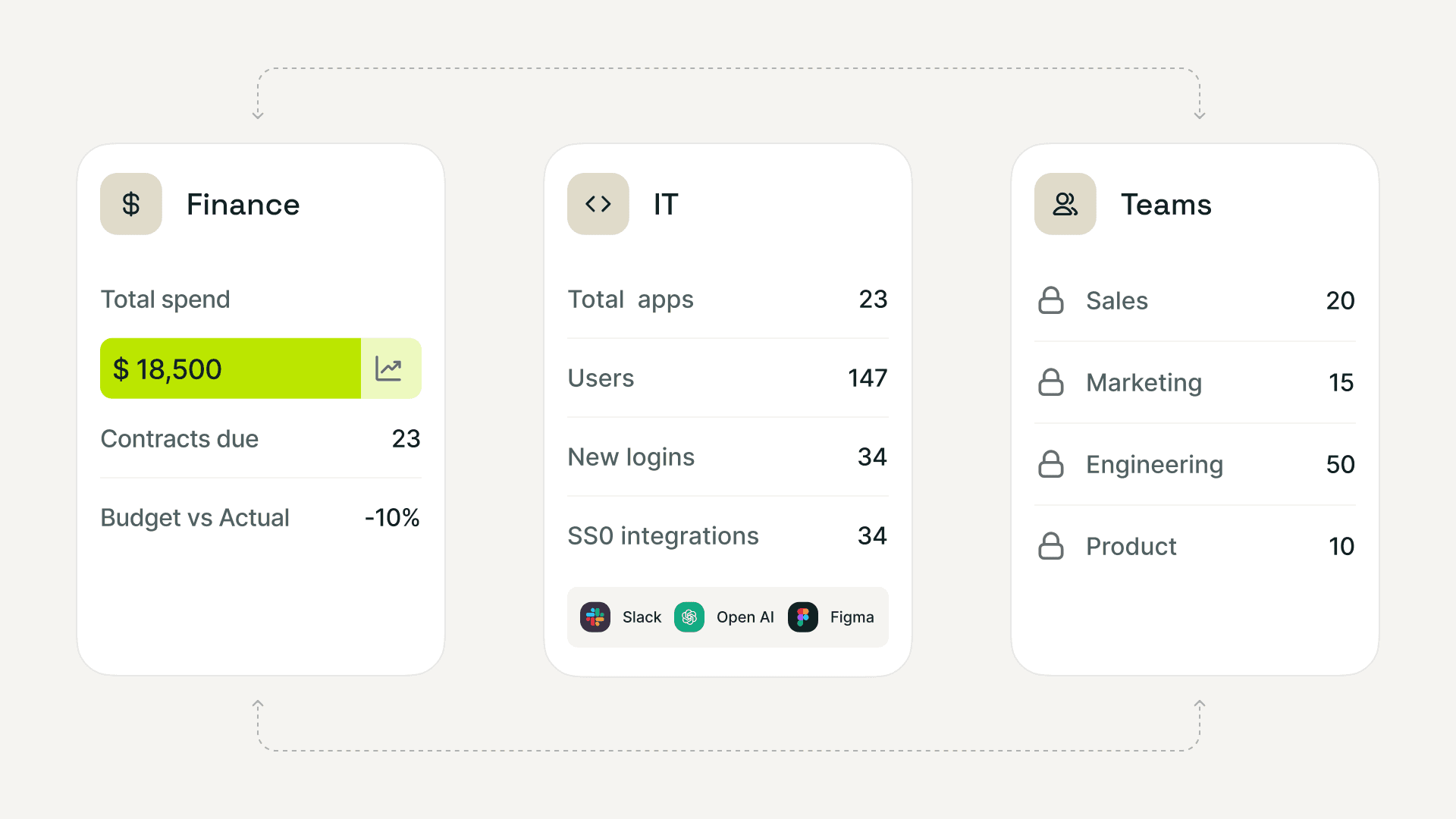
Subscription waste persists in B2B teams because visibility is fragmented by design.
Purchasing is distributed across departments. Payments flow through multiple cards, invoices, and expense systems. Contracts live in inboxes or shared drives. Ownership is unclear. Offboarding is inconsistent. Renewals often auto-trigger before anyone reviews them.
No single team sees the full picture. Finance sees spend but not usage. IT sees access but not cost. Teams buy tools locally, but nobody evaluates the stack globally. This is especially common for IT and operations teams, who are expected to manage access and offboarding without having a complete view of all active subscriptions.
This is why awareness alone does not solve the problem. Without a structured approach, subscriptions naturally fall through the gaps. The methods that follow exist to close those gaps, step by step.
How do you find hidden monthly subscriptions in a B2B environment?
To find hidden monthly subscriptions in a B2B environment, you need to audit recurring payments in bank statements and accounting systems, review actual software usage through identity and access data, and centralize contracts and renewal dates. Manual methods can uncover obvious waste, but preventing it from returning requires automated subscription tracking as teams and tool counts grow.
Why this approach works
Hidden subscriptions are rarely exposed by a single tactic.
Financial data shows what you pay for, but not whether it is used.
Usage and identity data shows who logs in, but not what it costs.
Contracts explain why renewals happen, but only if they are visible.
Finding hidden subscriptions requires combining all three perspectives into a single process:
Start with a financial audit to identify every recurring SaaS charge
Layer in usage and access reviews to find unused or over-licensed tools
Centralize contracts, ownership, and renewals to prevent future waste
In most companies, this process is led by finance teams because they are the first to see recurring charges across cards, invoices, and accounting.
For small teams, this can be done manually. For growing B2B organizations, manual audits quickly become outdated, which is why automated systems are used to maintain continuous visibility.
The methods below break this process down step by step, starting with the simplest and moving toward a scalable, long-term solution.
Method 1: The Manual Audit
Find where the money is actually going
This method focuses on one thing only: identifying every recurring subscription your business is paying for, regardless of whether anyone remembers approving it.
Before you can decide what to cancel, downgrade, or renegotiate, you need a reliable answer to a basic question: what subscriptions are we paying for right now?
Financial forensics looks strictly at money flow. Not usage. Not intent. Not perceived value. If money is leaving the business on a recurring basis, this method is designed to surface it.
What this method includes
Manual subscription tracking
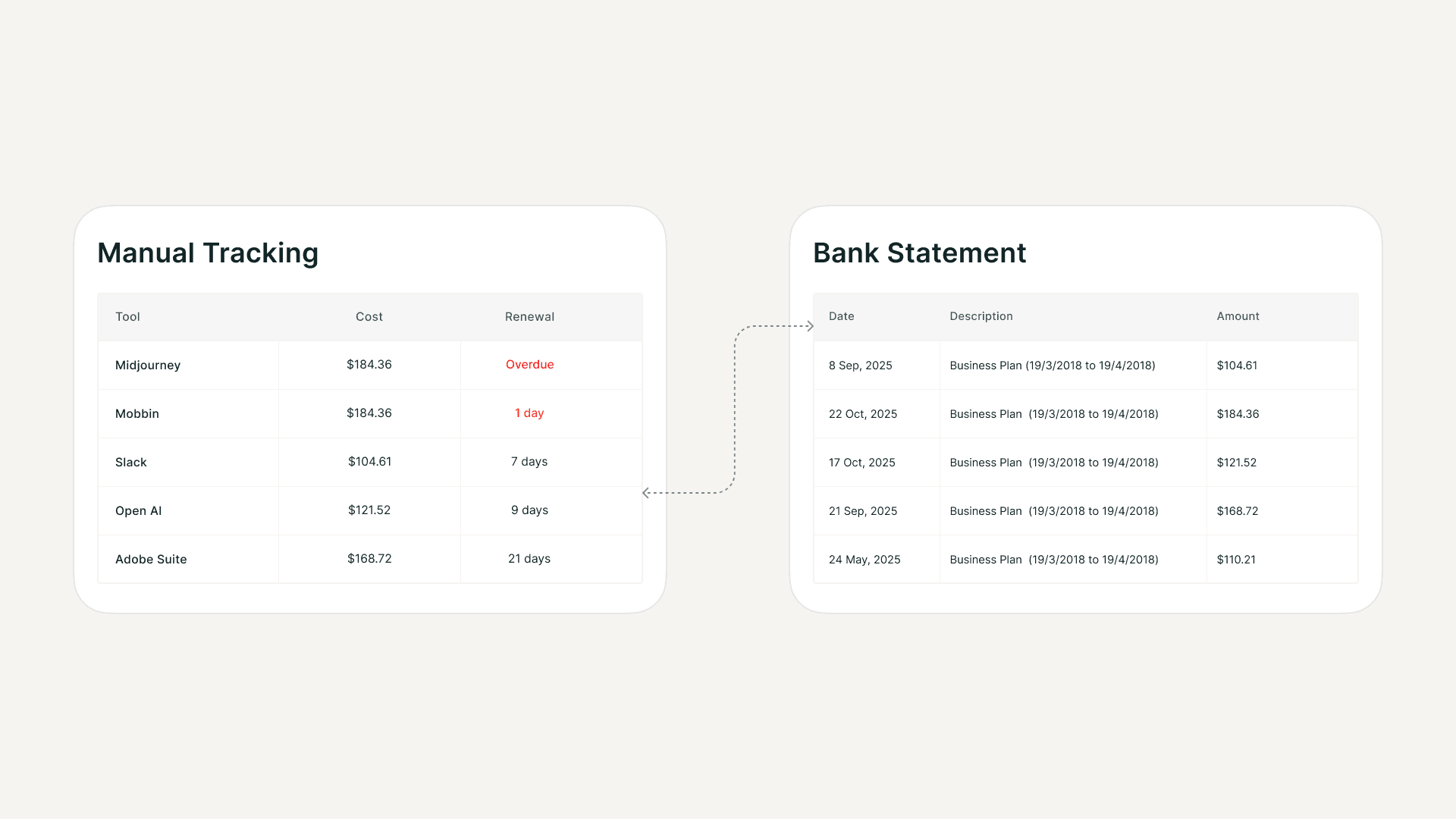
Spreadsheets, Notion, or Airtable are often the starting point. While not scalable long-term, they force structure by creating a single place where subscriptions are listed, reviewed, and questioned. This approach is especially common among small businesses that are building their first view of recurring SaaS spend.
Financial and bank analysis
Accounting systems, corporate cards, and expense reports reveal subscriptions that manual lists routinely miss. If a tool is being paid for, it will appear here, even if nobody remembers approving it.
What this method uncovers
Central subscription register
A single, authoritative list of all known subscriptions, including vendor, cost, billing cycle, payment method, and owner. This becomes the baseline for every decision that follows.
Recurring payment patterns
Vendors that appear month after month or year after year in accounting data, especially where amounts are similar but not always identical.
Shadow spend via cards and invoices
Tools paid through corporate cards, reimbursed personal cards, or standalone invoices that bypassed procurement or IT visibility.
Duplicate vendors and price creep
Multiple tools solving the same problem across teams, as well as subscriptions that have quietly increased in cost due to plan upgrades or seat growth.
By the end of this method, there is no guesswork left. You know where subscription money is flowing, which vendors deserve scrutiny, and where deeper investigation will produce fast wins in the next methods.
Method 2: Usage-Based Subscription Audits
Find who is actually using what you pay for
This method answers a different question than the manual audit. Not where the money goes, but whether anyone is actually using what you are paying for.
Usage-based subscription audits connect subscriptions to real people and real behavior. They expose licenses that look justified on paper but deliver little or no value in practice.
What this method includes
Identity and access audits
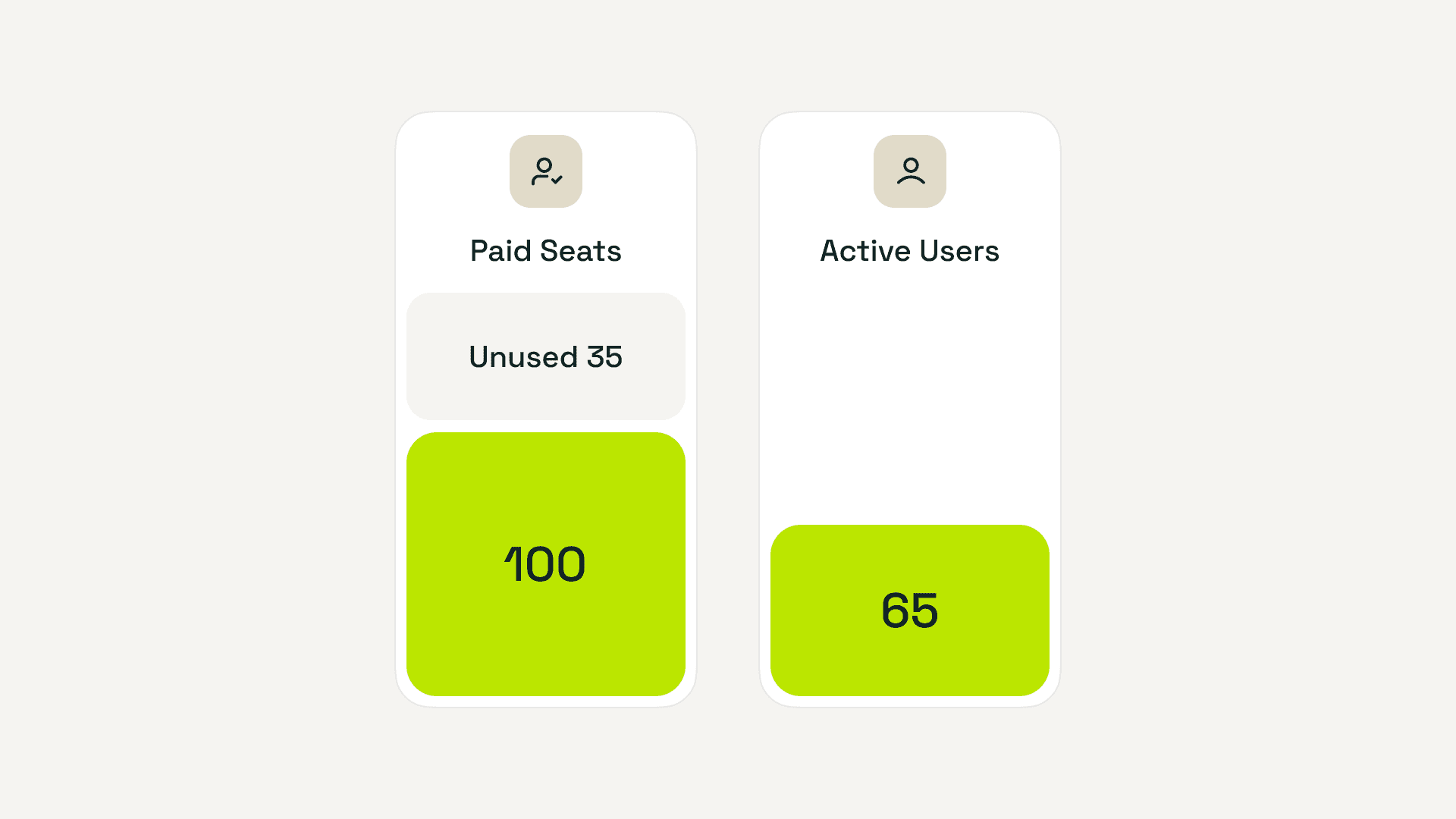
Single sign-on systems and identity providers make it possible to compare paid seats against real usage. By reviewing active users over the last 30, 60, or 90 days, teams can quickly identify licenses that exist without meaningful activity. This work is typically owned by IT and operations teams, who manage access, identity, and offboarding processes.
This is where the gap between purchased seats and real users becomes visible.
Shadow IT discovery
Not all tools appear in official subscription lists. Teams often sign up for software outside procurement using trials, corporate cards, or reimbursed personal accounts.
Usage-based audits surface these tools by looking at browser activity, network usage, and informal adoption patterns. These subscriptions frequently overlap with existing tools and rarely undergo cost or value reviews.
Employee offboarding and license reclamation
Every employee exit creates an opportunity for waste. When offboarding is inconsistent, access persists, seats remain assigned, and ownership disappears.
By tying usage data to people, this method exposes zombie licenses linked to former employees, contractors, or role changes. These are often the fastest and least disruptive savings to capture.
By the end of this method, subscriptions stop being abstract line items. Each tool is tied to real users, real activity, and a clear cost per active seat. Anything that fails that test becomes an obvious candidate for downsizing, consolidation, or removal.
Method 3: Contract & Operational Discipline
Make sure subscription waste does not come back
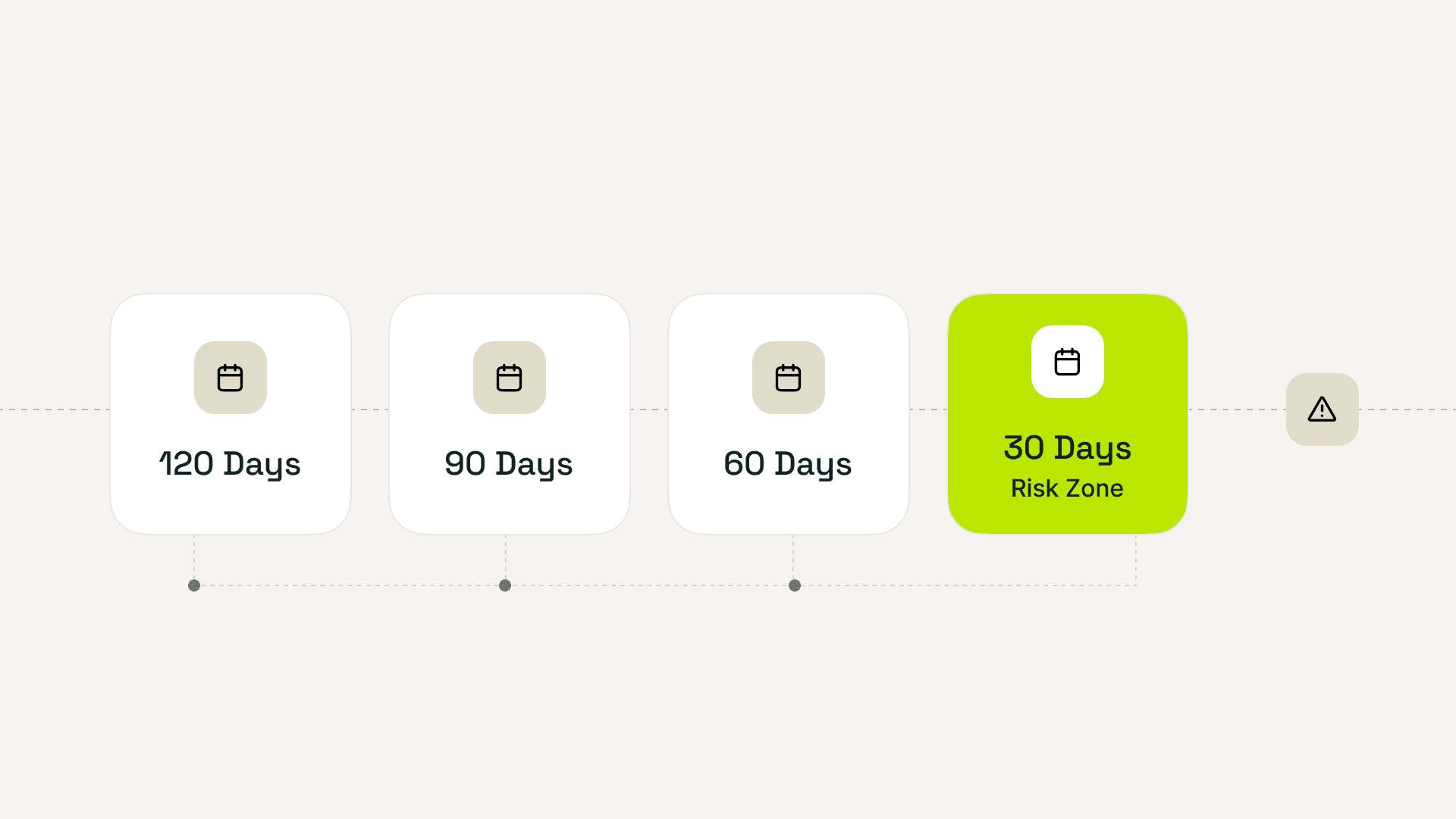
The first two methods help you find waste. This method makes sure you do not have to keep finding it over and over again.
Operational discipline is about turning subscription management into a repeatable system, not a periodic cleanup exercise triggered by budget pressure.
What this method includes
Contract management and renewal discipline
Most expensive mistakes happen at renewal. Auto-renew clauses, long notice periods, and price escalations quietly lock in spend when contracts are not reviewed early enough.
This method focuses on pulling key contract terms into the open and creating enough lead time to make intentional decisions before renewals happen. In most organizations, this responsibility sits with finance teams, who own renewals, contracts, and vendor negotiations.
Ownership and governance
Every subscription needs a clearly named owner. Not a team. Not “Finance.” A person.
Ownership means someone is accountable for value, usage, and renewal decisions. Governance adds lightweight rules around how new tools are approved and how existing ones are reviewed, without slowing teams down.
KPIs and continuous optimization
Instead of treating audits as one-off events, this method introduces a small set of metrics that make subscription health visible over time.
Spend, usage, and renewal timing become things you monitor continuously, not rediscover in a crisis.
What this method covers
Renewal review cadence
A structured process that ensures renewals are reviewed well before auto-renewals trigger, giving teams time to assess usage, negotiate, downgrade, or cancel.
Contract visibility
Central access to contract basics such as start and end dates, notice periods, auto-renew terms, and pricing mechanics, so decisions are based on facts rather than memory.
Ownership continuity
Clear reassignment of ownership when people change roles or leave, preventing tools from drifting into “nobody owns this” territory.
Vendor consolidation signals
Visibility into overlapping tools, rising spend concentration, and opportunities to reduce vendor count while increasing leverage and simplicity.
By the end of this method, subscription management stops being reactive. Renewals are deliberate, ownership survives team changes, and waste becomes harder to reintroduce than to prevent.
Method 4: Automated Subscription Management
The easy button for solving all of the above
Methods 1–3 are audits. They are effective, but they are also point-in-time interventions.
You run them. You clean things up. You reduce waste.
Then the business keeps moving.
New tools get added. People change roles. Employees leave. Renewals quietly auto-trigger. Within months, the same problems begin to reappear. Not because the audits failed, but because audits are, by nature, one-off efforts.
Method 4 is different. It is not an audit. It is a continuous system.
Automated subscription management exists to enforce the logic of the previous methods at all times, without relying on spreadsheets, calendar reminders, or institutional memory.
What this method includes
Dedicated subscription tracking and automation
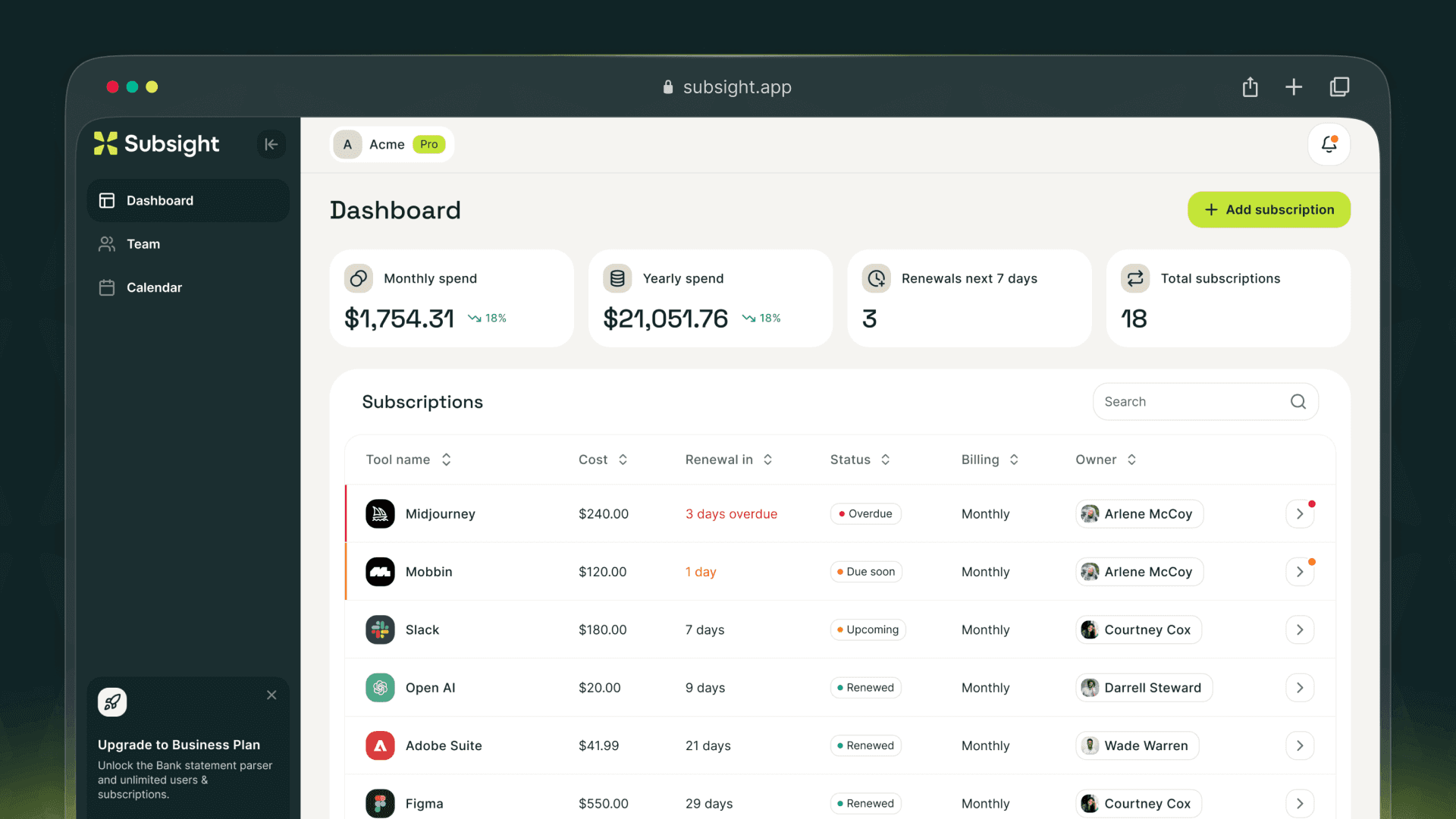
Tools like Subsight act as an always-on operational layer for subscription management. This is where purpose-built subscription management features replace manual processes entirely.
Instead of rebuilding visibility every quarter, teams operate from a live source of truth that stays current as subscriptions, people, and plans change.
Manual audits vs. a continuous system
Area | Manual Audits (Methods 1–3) | Continuous System (Subsight) |
|---|---|---|
Nature of control | One-off or periodic cleanups | Always-on, continuous oversight |
Subscription discovery | Depends on audits and reviews | AI-powered discovery from spreadsheets, PDFs, and bank statements |
Data freshness | Degrades between audits | Stays current by design |
Ownership tracking | Manually maintained | Automatically visible and enforced |
Renewal visibility | Easy to miss between reviews | Automated alerts before auto-renewals |
Shadow subscriptions | Often found late | Surfaced continuously |
Offboarding impact | Requires manual cleanup | Ownership and licenses are immediately visible |
Ongoing effort | High and repetitive | Low once set up |
Risk of renewal waste | Returns over time | Actively prevented |
Scalability | Breaks as the company grows | Designed to scale with the business |
What this method covers
AI-powered SaaS discovery and inventory
Automatically discover all SaaS using AI-driven categorization and analysis. Import data from spreadsheets, PDFs, or bank statements to generate a complete subscription inventory in seconds.
This creates immediate visibility into both known and previously hidden tools, reducing sprawl and risk from day one.
Centralized subscription system
All subscriptions live in one place with consistent structure, including cost, billing cycle, renewal date, and owner.
Ownership mapping
Every tool is assigned to a specific person. When roles change or employees leave, ownership is visible and easy to reassign, preventing drift.
Renewal reminders
Automated alerts surface renewals before auto-renewals trigger, giving teams time to review usage, renegotiate, downgrade, or cancel intentionally.
Ongoing visibility without manual maintenance
Instead of running audits repeatedly, teams maintain continuous control. Spend, renewals, and ownership stay visible without recurring cleanup work.
Methods 1–3 help you find and fix subscription waste.
Method 4 ensures you never have to fight the same battle again.
That shift, from one-off audits to a continuous system, is what turns subscription management from a recurring problem into a solved one. Teams evaluating automation can review pricing once the operational value is clear.
What Are “Hidden” Monthly Subscriptions?
Hidden monthly subscriptions are not necessarily secret. They are subscriptions your business pays for, but does not actively manage.
A visible subscription has clear ownership, known usage, and a renewal that is reviewed in advance. A hidden subscription still shows up in financial data, but lacks one or more of those properties. Nobody is quite sure who owns it, whether it is still needed, or when it renews.
Common examples include:
Licenses assigned to former employees or role changes
Department-level tools paid on cards outside procurement
Trials that quietly converted into paid plans
Upgraded tiers that were never downgraded
Duplicate tools solving the same problem
Small recurring charges that escape scrutiny
Individually, these subscriptions look harmless. Collectively, they create significant and persistent waste.
Why B2B Subscription Waste Is Hard to Detect
Subscription waste persists in B2B teams because visibility is fragmented by design.
Purchasing is distributed across departments. Payments flow through multiple cards, invoices, and expense systems. Contracts live in inboxes or shared drives. Ownership is unclear. Offboarding is inconsistent. Renewals often auto-trigger before anyone reviews them.
No single team sees the full picture. Finance sees spend but not usage. IT sees access but not cost. Teams buy tools locally, but nobody evaluates the stack globally. This is especially common for IT and operations teams, who are expected to manage access and offboarding without having a complete view of all active subscriptions.
This is why awareness alone does not solve the problem. Without a structured approach, subscriptions naturally fall through the gaps. The methods that follow exist to close those gaps, step by step.
How do you find hidden monthly subscriptions in a B2B environment?
To find hidden monthly subscriptions in a B2B environment, you need to audit recurring payments in bank statements and accounting systems, review actual software usage through identity and access data, and centralize contracts and renewal dates. Manual methods can uncover obvious waste, but preventing it from returning requires automated subscription tracking as teams and tool counts grow.
Why this approach works
Hidden subscriptions are rarely exposed by a single tactic.
Financial data shows what you pay for, but not whether it is used.
Usage and identity data shows who logs in, but not what it costs.
Contracts explain why renewals happen, but only if they are visible.
Finding hidden subscriptions requires combining all three perspectives into a single process:
Start with a financial audit to identify every recurring SaaS charge
Layer in usage and access reviews to find unused or over-licensed tools
Centralize contracts, ownership, and renewals to prevent future waste
In most companies, this process is led by finance teams because they are the first to see recurring charges across cards, invoices, and accounting.
For small teams, this can be done manually. For growing B2B organizations, manual audits quickly become outdated, which is why automated systems are used to maintain continuous visibility.
The methods below break this process down step by step, starting with the simplest and moving toward a scalable, long-term solution.
Method 1: The Manual Audit
Find where the money is actually going
This method focuses on one thing only: identifying every recurring subscription your business is paying for, regardless of whether anyone remembers approving it.
Before you can decide what to cancel, downgrade, or renegotiate, you need a reliable answer to a basic question: what subscriptions are we paying for right now?
Financial forensics looks strictly at money flow. Not usage. Not intent. Not perceived value. If money is leaving the business on a recurring basis, this method is designed to surface it.
What this method includes
Manual subscription tracking
Spreadsheets, Notion, or Airtable are often the starting point. While not scalable long-term, they force structure by creating a single place where subscriptions are listed, reviewed, and questioned. This approach is especially common among small businesses that are building their first view of recurring SaaS spend.
Financial and bank analysis
Accounting systems, corporate cards, and expense reports reveal subscriptions that manual lists routinely miss. If a tool is being paid for, it will appear here, even if nobody remembers approving it.
What this method uncovers
Central subscription register
A single, authoritative list of all known subscriptions, including vendor, cost, billing cycle, payment method, and owner. This becomes the baseline for every decision that follows.
Recurring payment patterns
Vendors that appear month after month or year after year in accounting data, especially where amounts are similar but not always identical.
Shadow spend via cards and invoices
Tools paid through corporate cards, reimbursed personal cards, or standalone invoices that bypassed procurement or IT visibility.
Duplicate vendors and price creep
Multiple tools solving the same problem across teams, as well as subscriptions that have quietly increased in cost due to plan upgrades or seat growth.
By the end of this method, there is no guesswork left. You know where subscription money is flowing, which vendors deserve scrutiny, and where deeper investigation will produce fast wins in the next methods.
Method 2: Usage-Based Subscription Audits
Find who is actually using what you pay for
This method answers a different question than the manual audit. Not where the money goes, but whether anyone is actually using what you are paying for.
Usage-based subscription audits connect subscriptions to real people and real behavior. They expose licenses that look justified on paper but deliver little or no value in practice.
What this method includes
Identity and access audits
Single sign-on systems and identity providers make it possible to compare paid seats against real usage. By reviewing active users over the last 30, 60, or 90 days, teams can quickly identify licenses that exist without meaningful activity. This work is typically owned by IT and operations teams, who manage access, identity, and offboarding processes.
This is where the gap between purchased seats and real users becomes visible.
Shadow IT discovery
Not all tools appear in official subscription lists. Teams often sign up for software outside procurement using trials, corporate cards, or reimbursed personal accounts.
Usage-based audits surface these tools by looking at browser activity, network usage, and informal adoption patterns. These subscriptions frequently overlap with existing tools and rarely undergo cost or value reviews.
Employee offboarding and license reclamation
Every employee exit creates an opportunity for waste. When offboarding is inconsistent, access persists, seats remain assigned, and ownership disappears.
By tying usage data to people, this method exposes zombie licenses linked to former employees, contractors, or role changes. These are often the fastest and least disruptive savings to capture.
By the end of this method, subscriptions stop being abstract line items. Each tool is tied to real users, real activity, and a clear cost per active seat. Anything that fails that test becomes an obvious candidate for downsizing, consolidation, or removal.
Method 3: Contract & Operational Discipline
Make sure subscription waste does not come back
The first two methods help you find waste. This method makes sure you do not have to keep finding it over and over again.
Operational discipline is about turning subscription management into a repeatable system, not a periodic cleanup exercise triggered by budget pressure.
What this method includes
Contract management and renewal discipline
Most expensive mistakes happen at renewal. Auto-renew clauses, long notice periods, and price escalations quietly lock in spend when contracts are not reviewed early enough.
This method focuses on pulling key contract terms into the open and creating enough lead time to make intentional decisions before renewals happen. In most organizations, this responsibility sits with finance teams, who own renewals, contracts, and vendor negotiations.
Ownership and governance
Every subscription needs a clearly named owner. Not a team. Not “Finance.” A person.
Ownership means someone is accountable for value, usage, and renewal decisions. Governance adds lightweight rules around how new tools are approved and how existing ones are reviewed, without slowing teams down.
KPIs and continuous optimization
Instead of treating audits as one-off events, this method introduces a small set of metrics that make subscription health visible over time.
Spend, usage, and renewal timing become things you monitor continuously, not rediscover in a crisis.
What this method covers
Renewal review cadence
A structured process that ensures renewals are reviewed well before auto-renewals trigger, giving teams time to assess usage, negotiate, downgrade, or cancel.
Contract visibility
Central access to contract basics such as start and end dates, notice periods, auto-renew terms, and pricing mechanics, so decisions are based on facts rather than memory.
Ownership continuity
Clear reassignment of ownership when people change roles or leave, preventing tools from drifting into “nobody owns this” territory.
Vendor consolidation signals
Visibility into overlapping tools, rising spend concentration, and opportunities to reduce vendor count while increasing leverage and simplicity.
By the end of this method, subscription management stops being reactive. Renewals are deliberate, ownership survives team changes, and waste becomes harder to reintroduce than to prevent.
Method 4: Automated Subscription Management
The easy button for solving all of the above
Methods 1–3 are audits. They are effective, but they are also point-in-time interventions.
You run them. You clean things up. You reduce waste.
Then the business keeps moving.
New tools get added. People change roles. Employees leave. Renewals quietly auto-trigger. Within months, the same problems begin to reappear. Not because the audits failed, but because audits are, by nature, one-off efforts.
Method 4 is different. It is not an audit. It is a continuous system.
Automated subscription management exists to enforce the logic of the previous methods at all times, without relying on spreadsheets, calendar reminders, or institutional memory.
What this method includes
Dedicated subscription tracking and automation
Tools like Subsight act as an always-on operational layer for subscription management. This is where purpose-built subscription management features replace manual processes entirely.
Instead of rebuilding visibility every quarter, teams operate from a live source of truth that stays current as subscriptions, people, and plans change.
Manual audits vs. a continuous system
Area | Manual Audits (Methods 1–3) | Continuous System (Subsight) |
|---|---|---|
Nature of control | One-off or periodic cleanups | Always-on, continuous oversight |
Subscription discovery | Depends on audits and reviews | AI-powered discovery from spreadsheets, PDFs, and bank statements |
Data freshness | Degrades between audits | Stays current by design |
Ownership tracking | Manually maintained | Automatically visible and enforced |
Renewal visibility | Easy to miss between reviews | Automated alerts before auto-renewals |
Shadow subscriptions | Often found late | Surfaced continuously |
Offboarding impact | Requires manual cleanup | Ownership and licenses are immediately visible |
Ongoing effort | High and repetitive | Low once set up |
Risk of renewal waste | Returns over time | Actively prevented |
Scalability | Breaks as the company grows | Designed to scale with the business |
What this method covers
AI-powered SaaS discovery and inventory
Automatically discover all SaaS using AI-driven categorization and analysis. Import data from spreadsheets, PDFs, or bank statements to generate a complete subscription inventory in seconds.
This creates immediate visibility into both known and previously hidden tools, reducing sprawl and risk from day one.
Centralized subscription system
All subscriptions live in one place with consistent structure, including cost, billing cycle, renewal date, and owner.
Ownership mapping
Every tool is assigned to a specific person. When roles change or employees leave, ownership is visible and easy to reassign, preventing drift.
Renewal reminders
Automated alerts surface renewals before auto-renewals trigger, giving teams time to review usage, renegotiate, downgrade, or cancel intentionally.
Ongoing visibility without manual maintenance
Instead of running audits repeatedly, teams maintain continuous control. Spend, renewals, and ownership stay visible without recurring cleanup work.
Methods 1–3 help you find and fix subscription waste.
Method 4 ensures you never have to fight the same battle again.
That shift, from one-off audits to a continuous system, is what turns subscription management from a recurring problem into a solved one. Teams evaluating automation can review pricing once the operational value is clear.

Control SaaS sprawl
Understand how teams manage licenses, renewals, and risk in one place.
Turning Subscription Chaos into a Strategic Advantage
Most companies discover subscription waste the same way every time. A budget review. A runway scare. A sudden realization that SaaS spend feels too high.
They run an audit. They cancel a few tools. Costs go down. Then, slowly, the sprawl returns.
Why one-off audits always fail
One-off audits fail because they treat symptoms, not systems.
A spreadsheet review or a hurried cancellation pass can remove visible waste, but it does nothing to change how subscriptions are bought, owned, renewed, or forgotten. New tools get added. People change roles. Employees leave. Renewals auto-trigger. Six months later, the same problems are back, just wearing different vendor names.
Without structure, audits become reactive cleanups instead of durable solutions.
Turning Subscription Chaos into a Strategic Advantage
Most companies discover subscription waste the same way every time. A budget review. A runway scare. A sudden realization that SaaS spend feels too high.
They run an audit. They cancel a few tools. Costs go down. Then, slowly, the sprawl returns.
Why one-off audits always fail
One-off audits fail because they treat symptoms, not systems.
A spreadsheet review or a hurried cancellation pass can remove visible waste, but it does nothing to change how subscriptions are bought, owned, renewed, or forgotten. New tools get added. People change roles. Employees leave. Renewals auto-trigger. Six months later, the same problems are back, just wearing different vendor names.
Without structure, audits become reactive cleanups instead of durable solutions.

Pro Tip: The fastest way to tell if subscription waste will return is simple: ask who owns each renewal. If a tool has no clearly accountable owner and no reminder before renewal, it is almost guaranteed to auto-renew unnoticed, no matter how good the last audit was.
Pro Tip: The fastest way to tell if subscription waste will return is simple: ask who owns each renewal. If a tool has no clearly accountable owner and no reminder before renewal, it is almost guaranteed to auto-renew unnoticed, no matter how good the last audit was.
Systems, ownership, and reminders are what actually work
Sustainable control comes from three things working together.
First, systems. A single place where every subscription lives, with consistent data and visibility.
Second, ownership. Every tool needs a clearly accountable person who understands why it exists and what value it delivers.
Third, reminders. Renewals should never be surprises. Decisions should happen before money is locked in, not after it is already spent.
When these elements are in place, subscription management stops relying on memory, heroics, or quarterly panic.
From reactive cost cutting to proactive control
The shift is subtle but powerful.
Reactive teams cut costs when they have to. Proactive teams review spend continuously, right-size tools before renewals, and eliminate waste before it compounds.
Over time, this turns SaaS from an uncontrolled expense into a managed asset. Spend becomes predictable. Ownership becomes clear. Decisions become intentional.
Subscription chaos is not inevitable. With the right methods, structure, and automation, it becomes a source of clarity, leverage, and long-term control rather than a recurring drain on the business.
Final Takeaways & Immediate Next Steps
Finding hidden subscriptions is not about running one perfect audit. It is about building enough structure that waste cannot quietly return.
If you do nothing else after reading this guide, do the following three things this week.
Three actions you can take right now
1. Run a fast manual audit
List every recurring SaaS payment you can find across accounting, corporate cards, and expense reports. Do not aim for perfection. Aim for visibility. Even a rough list will surface forgotten tools, duplicates, and obvious waste.
2. Centralize your subscriptions in one place
Move your findings into a single system. That can start as a spreadsheet, but it should be structured with owners, costs, billing cycles, and renewal dates. The goal is to eliminate scattered knowledge and make subscriptions reviewable instead of invisible.
3. Put renewal control in place
Identify the next five renewals and make sure none of them auto-renew by accident. Review usage, assign an owner, and decide whether to keep, downgrade, renegotiate, or cancel before money is locked in.
Where Subsight fits
Once teams try to maintain this manually, the cracks appear quickly. Spreadsheets drift out of date. Owners change. Reminders get missed.
That is where Subsight becomes the natural operational hub, providing a central subscription management system that replaces scattered tracking with continuous visibility.
It applies the same logic outlined in this guide, but enforces it automatically. Subscriptions live in one place. Ownership is visible. Renewals surface before they happen. AI-powered discovery helps ensure nothing slips through the cracks.
Instead of periodically asking, “What are we paying for again?”, teams always know.
The call to action
Audit what you have.
Centralize it.
Stop renewal waste before it happens.
Whether you start with a spreadsheet or move directly to Subsight, the important part is taking control now. Every unused license and forgotten renewal you prevent is money that goes straight back into growth, runway, and optionality.
Systems, ownership, and reminders are what actually work
Sustainable control comes from three things working together.
First, systems. A single place where every subscription lives, with consistent data and visibility.
Second, ownership. Every tool needs a clearly accountable person who understands why it exists and what value it delivers.
Third, reminders. Renewals should never be surprises. Decisions should happen before money is locked in, not after it is already spent.
When these elements are in place, subscription management stops relying on memory, heroics, or quarterly panic.
From reactive cost cutting to proactive control
The shift is subtle but powerful.
Reactive teams cut costs when they have to. Proactive teams review spend continuously, right-size tools before renewals, and eliminate waste before it compounds.
Over time, this turns SaaS from an uncontrolled expense into a managed asset. Spend becomes predictable. Ownership becomes clear. Decisions become intentional.
Subscription chaos is not inevitable. With the right methods, structure, and automation, it becomes a source of clarity, leverage, and long-term control rather than a recurring drain on the business.
Final Takeaways & Immediate Next Steps
Finding hidden subscriptions is not about running one perfect audit. It is about building enough structure that waste cannot quietly return.
If you do nothing else after reading this guide, do the following three things this week.
Three actions you can take right now
1. Run a fast manual audit
List every recurring SaaS payment you can find across accounting, corporate cards, and expense reports. Do not aim for perfection. Aim for visibility. Even a rough list will surface forgotten tools, duplicates, and obvious waste.
2. Centralize your subscriptions in one place
Move your findings into a single system. That can start as a spreadsheet, but it should be structured with owners, costs, billing cycles, and renewal dates. The goal is to eliminate scattered knowledge and make subscriptions reviewable instead of invisible.
3. Put renewal control in place
Identify the next five renewals and make sure none of them auto-renew by accident. Review usage, assign an owner, and decide whether to keep, downgrade, renegotiate, or cancel before money is locked in.
Where Subsight fits
Once teams try to maintain this manually, the cracks appear quickly. Spreadsheets drift out of date. Owners change. Reminders get missed.
That is where Subsight becomes the natural operational hub, providing a central subscription management system that replaces scattered tracking with continuous visibility.
It applies the same logic outlined in this guide, but enforces it automatically. Subscriptions live in one place. Ownership is visible. Renewals surface before they happen. AI-powered discovery helps ensure nothing slips through the cracks.
Instead of periodically asking, “What are we paying for again?”, teams always know.
The call to action
Audit what you have.
Centralize it.
Stop renewal waste before it happens.
Whether you start with a spreadsheet or move directly to Subsight, the important part is taking control now. Every unused license and forgotten renewal you prevent is money that goes straight back into growth, runway, and optionality.

Start with clarity
Track subscriptions and renewals before SaaS complexity accelerates.
Frequently Asked Questions
Frequently Asked Questions
How often should a business audit its SaaS subscriptions?
What is the most common source of hidden subscription waste?
Can small teams manage subscriptions without dedicated software?
Why aren’t accounting tools enough to manage SaaS subscriptions?
When does it make sense to switch to automated subscription management?
How often should a business audit its SaaS subscriptions?
What is the most common source of hidden subscription waste?
Can small teams manage subscriptions without dedicated software?
Why aren’t accounting tools enough to manage SaaS subscriptions?
When does it make sense to switch to automated subscription management?
How often should a business audit its SaaS subscriptions?
What is the most common source of hidden subscription waste?
Can small teams manage subscriptions without dedicated software?
Why aren’t accounting tools enough to manage SaaS subscriptions?
When does it make sense to switch to automated subscription management?

Find hidden SaaS subscriptions
Track every tool, owner, and renewal in one place. No spreadsheets. No surprise renewals.

Join 100+ founders in line

Petras Nargela

Petras is the Founder of Subsight and a veteran entrepreneur with over 10+ years of experience building and scaling digital ventures. Over the past decade, he has co-founded several successful companies that generate 7-figure annual revenue, including a Shopify app studio and a digital agency. Having managed the complex financial stacks of multiple high-growth businesses, he built Subsight to solve the "SaaS leakage" problem he experienced firsthand. He now helps B2B teams turn software chaos into a strategic, automated advantage.
Cost control
What is SaaS Management? The 2026 Guide
Feb 2, 2026
12 min. read

Cost control
What is SaaS Management? The 2026 Guide
Feb 2, 2026
12 min. read
Cost control
What is SaaS Management? The 2026 Guide
Feb 2, 2026
12 min. read
Finance tips
What is the best subscription tracker of 2026?
Jan 26, 2026
13 min. read

Finance tips
What is the best subscription tracker of 2026?
Jan 26, 2026
13 min. read
Finance tips
What is the best subscription tracker of 2026?
Jan 26, 2026
13 min. read

Affordable subscription tracking for teams
Track, manage, and cancel subscriptions in minutes. Join the waitlist today to secure 40% off your first 3 months.







































Affordable subscription tracking for teams
Track, manage, and cancel subscriptions in minutes. Join the waitlist today to secure 40% off your first 3 months.
Affordable subscription tracking for teams
Track, manage, and cancel subscriptions in minutes. Join the waitlist today to secure 40% off your first 3 months.